





What Is a Residential RDP? The Complete Technical Guide
Ask ten people what a residential RDP is and you get ten answers, most of them wrong. Here is what it actually is at the network level — and when it is the wrong purchase.
Four products that solve four different problems. The most common mistake is buying the expensive one when the cheap one would have worked — so start here.
A full Windows desktop behind an ISP-issued address, held for as long as you keep the plan.
HTTP(S) and SOCKS5 exits on genuine consumer lines, with sticky sessions and city targeting.
Single-tenant hardware with predictable latency and no noisy neighbours.
Fast, cheap virtual machines in the US and UK for everything that does not need residential egress.
All prices in USD. Yearly billing takes 20% off. No setup fees, no activation charges, and every plan can be upgraded mid-term.
4 GB RAM residential desktop on an AT&T-issued address.
Spectrum-issued address, tuned for interactive work.
CenturyLink residential egress with a stable static address.
Higher-specification desktop for multi-profile workloads.
Entry-level residential exit on an AT&T address.
Spectrum-issued exit with city-level targeting.
Premium Fios exit for demanding targets.
Comcast egress with wide metro coverage.
Entry configuration for light, always-on workloads.
The balanced choice for application and database hosting.
More cores and memory for busier services.
NVMe-backed configuration for databases and analytics.
Small, fast VPS for a single service.
The default choice for web applications.
London-hosted VPS for European latency.
Customers served
Active machines
US metros covered
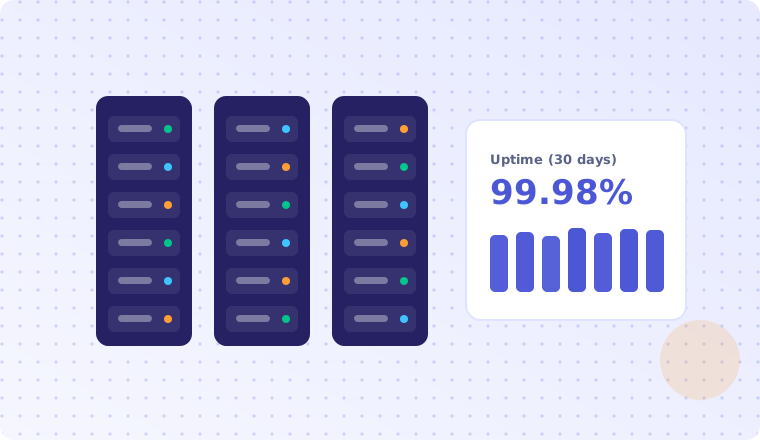
Uptime last 12 months
Tell us which network and metro you need. We check live availability before taking the order.
Every allocation is reputation-checked against the blocklists that matter to your use case.
Servers arrive automatically; residential allocations are confirmed by a human, usually within the hour.
Start with one unit, measure your real success rate, then add capacity on a term discount.
Microsoft's Remote Desktop Protocol connects you to a full Windows desktop over the network. What makes ours residential is the exit: the machine's public address is issued by a consumer ISP rather than a hosting company, so the traffic carries household reputation instead of datacentre reputation.
That single difference is worth a great deal on any platform that scores incoming connections — which today is most of them.
Servers and VPS instances are automated end to end. Residential allocations are human-checked against live pool availability.
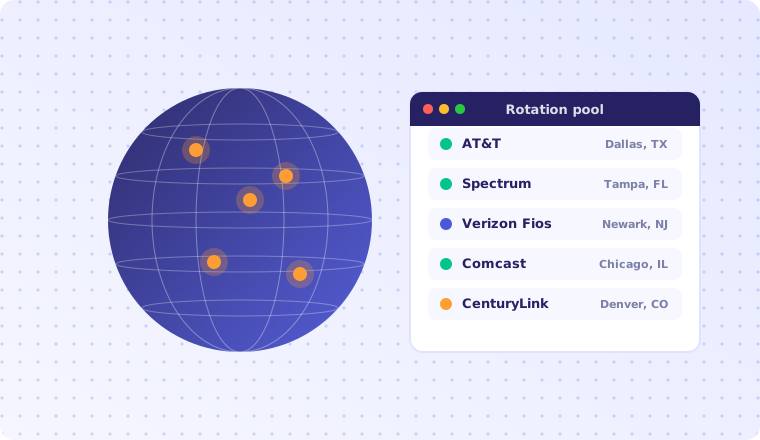
AT&T, Spectrum, Verizon Fios, Comcast and CenturyLink egress in named US metros — not a generic “US residential” label.
Skype, email and ticket support staffed across US and European hours, with a one-hour first response on priority plans.
If an address arrives already listed on a blocklist relevant to your use case, we swap it at no charge.
Indicative round-trip times from our monitoring probes, refreshed every few seconds. Latency is the specification nobody quotes and everybody feels.
Ask ten people what a residential RDP is and you get ten answers, most of them wrong. Here is what it actually is at the network level — and when it is the wrong purchase.
Vendors sell on adjectives. This comparison replaces them with four measurable properties — and the arithmetic that shows why the expensive pool is often the cheap one.
Most teams buy dedicated hardware without profiling anything, then pay for a migration six weeks later. This is the profiling they should have done first.
Tell us the target and the volume. We will tell you the cheapest pool that will actually work — even when that means selling you less.